



The transition to Qargo was the most smooth and professional conversion I’ve ever experienced – and we did it right before our busiest season.
— Jeffrey Jackman, Director of Transportation
About Premier Refrigerated Transport (PRT)
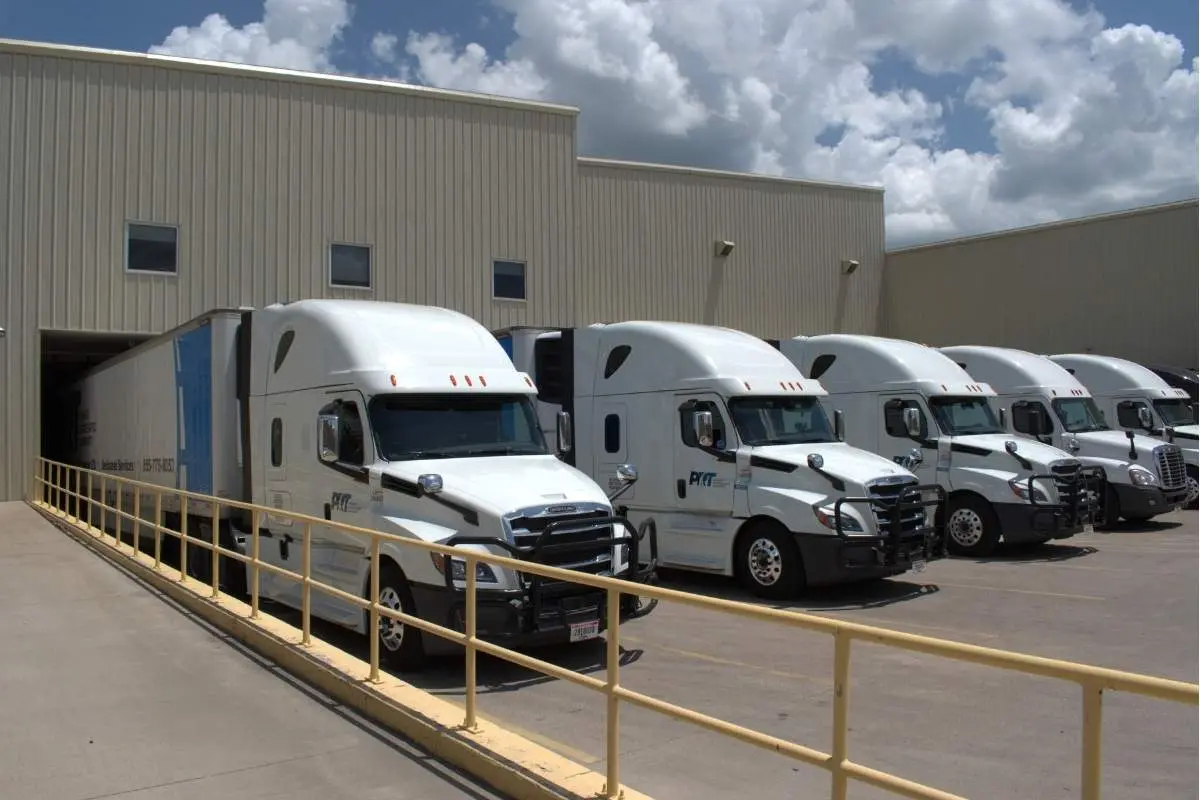
Premier Refrigerated Transport (PRT) is the dedicated private fleet operation for Monterey Mushrooms – the largest mushroom distributor in the United States.
Based in Houston, Texas, PRT runs a temperature-controlled fleet across the US, with operations spanning Texas, California and Tennessee, alongside cross-border movements from Mexico into the US.
In cold chain logistics, there’s no margin for error. Mushrooms are extremely time, and temperature-sensitive, which makes on-time delivery, real-time visibility and proactive exception management non-negotiable.
“Time is of the essence unlike any other commodity I think is out there,” said Jeffrey. “On-time performance and accurate real-time tracking of the trucks, whether they’re ours or outside carriers, is critical.”
Alongside execution, reporting plays a central role in the day-to-day operation.
“Utilisation, mileage, driver hours, driver costs, equipment costs – those are things we’re looking at constantly,” added Pete Novembre, Business Analyst at PRT. “We want to be able to leverage the system to do more of that, automatically.”
How they found Qargo
PRT’s journey to Qargo started with a broader systems shift.
The business was directed to move core financial operations onto JD Edwards (JDE), which immediately triggered the need to modernise their dispatch platform as well. Their previous system had begun to feel clunky, dated and difficult to work with, especially as integration requirements increased. For a business where on-time performance and real-time tracking are critical, it became quickly apparent that the legacy TMS wasn’t sustainable.
“We were looking to change the dispatch system anyway,” Pete explained. “It wasn’t user-friendly, and it wasn’t keeping up.”
From the outset, integration capability was the primary requirement. The team started with a practical filter.
PRT uses Samsara as its Electronic Logging Device (ELD), to track driver time and hours of service (HOS), and ensure compliance with the Federal Motor Carrier Safety Administration (FMCSA) regulations, so any new dispatch platform needed to integrate with it from day one.
From there, they built a longlist of providers and ran a structured evaluation: essential requirements, nice-to-haves, and a deep technical checklist covering everything from routing logic to document handling and reporting.
Multiple demos followed, first with leadership and IT, then with dispatch. That final step proved decisive.
“The dispatch teams liked Qargo the best,” Jeffrey said. “They could see how it would actually work for them day to day.”
The challenge
PRT wasn’t just replacing a Transportation Management System – they were modernising the backbone of a high-stakes cold chain operation.
Their legacy system struggled in a few key areas:
- Limited usability, especially for newer coordinators
- Poor stop-level visibility, making proactive exception handling harder
- Increasing integration complexity, as systems moved toward API-first architectures
- And a critical requirement: driver pay
A driver pay module was non-negotiable. US trucking runs on driver pay models tied to cents per miles, drops, detention time, breakdown pay, and trip complexity – something PRT’s previous system handled as a financial system of record. PRT needed a TMS that could handle that operational reality.
They also needed to connect dispatch and finance more cleanly as JD Edwards became the “mothership” system for finance. Integrations weren’t an add-on – they were a core requirement.
On top of that, timing mattered. PRT had a narrow window to convert – and November and December are their busiest months.
“For us to feel comfortable enough to go live right before peak season says a lot,” Jeffrey said.
The solution
PRT chose Qargo because it could modernise dispatch, strengthen real-time visibility and integration with core systems into one platform, without losing the operational detail or slowing the teams down doing the work.
One feature stood out immediately for dispatch: the Stops view.
“It’s like an arrivals and departures board at an airport,” Pete said. “You can see what’s coming next, what’s at risk, and what needs attention- all in one place.”
It makes it much easier to manage what’s coming next, spot exceptions, and stay proactive when a load is at risk.
The visual interface was another major shift. With Qargo, they moved away from relying on an Excel-style, hard-to-read system. “The Qargo interface is easier to understand, easier to train on, and easier to work with.”
An essential US requirement: driver pay
At the same time, Qargo’s implementation team worked closely with PRT to build out additional requirements, including driver pay structures – a capability that isn’t always standard in European-led implementations, but is fundamental for US fleets. Qargo’s implementation team really leaned in to deliver this.
“I’ll give Qargo a big compliment, they put a lot of effort into building our driver pay structure.Tom Gardin, VP of Customer Success at Qargo, really embraced that challenge. That made a huge difference for us”, noted Pete.
Integrations
To reduce complexity and keep operations connected, PRT’s implementation focused on integrations that matter most for day-to-day execution and visibility:
- JD Edwards (ERP) via API: Orders flowing from JDE to Qargo, with master data syncing as the core backbone
- Samsara: Dispatching loads to Samsara and receiving location and status updates back into Qargo via geofencing and driver activity
- Qlik (BI / Reporting): Data pulled from Qargo to support dashboard creation and operational reporting
Additional integration workflows are planned as part of the broader roadmap, including acknowledgements back into JD Edwards, invoicing workflows, milestone updates back to the ERP, and a trailer and temperature-related integration with Thermo King.
Alongside this, PRT is actively testing the Qargo driver mobile app for real-time tracking and documentation capture, laying the groundwork for improved outside-carrier visibility.
Longer-term aspirations include integrating Emerge for load bidding and Penske for vehicle maintenance.
The onboarding experience
PRT went live on November 1st, 2025, on a fixed calendar deadline, right ahead of their busiest season!
The approach was structured and operationally-led. Managers and supervisors completed super-user training first, and the team ran intensive testing, including a period of parallel running to ensure dispatchers were comfortable in Qargo before the switch was final.
Small post-go-live adjustments came up (as they always do), but the team described the rollout as the fastest and most professional transition they’d experienced across multiple system migrations.
The onboarding process included:
- On-site discovery sessions
- Super-user training for managers and supervisors
- Parallel testing with the legacy system for several weeks
- Close collaboration between Qargo’s onboarding team and PRT’s IT, finance and dispatch teams
“I’ve done three TMS conversions in my career,” Jeffrey said. “This was the fastest one I’ve ever done and the transition from our current TMS to Qargo was the most smooth and professional transition that I’ve ever experienced.”
The team also set up shared tools to streamline collaboration, including a live issue log, terminology alignment, and screenshot-based feedback, which helped speed up fixes and avoid confusion.
“Lee made himself available through the go-live weekend.Issues were fixed quickly. We felt supported the whole time.”
The results
While PRT is still rolling out some next-stage capabilities, the shift has already delivered a meaningful change in how the team runs dispatch and manages visibility:
✅ One of the smoothest and most professional TMS transitions the team has experienced
✅ Improved stop-level visibility for dispatch, with clearer exception handling
✅ Strong integration foundations across dispatch, telematics, finance and reporting
✅ A driver pay structure that fits the realities of the US market
✅ A modern interface that’s easier to adopt and easier to work in day to day
✅ High confidence going live immediately before peak season
The finished product is easy to use. Compared to past systems where we joked it was ‘a report only a developer could love’ – this is different. Your customer support team really understands transportation and really heeds the people on the ground.
Why it matters
In modern transport, particularly refrigerated transport, the difference between ‘fine’ and ‘failing’ often comes down to visibility and efficiency.
But efficiency isn’t about speed alone. It’s about predictability, visibility and control. When you can spot risk earlier, you can intervene sooner, protecting both customer experience and operational performance.
For operators like PRT, having a platform that connects dispatch, telematics and finance, and supports US-specific workflows, is essential to scaling without adding complexity.
For fleets balancing tight delivery windows, complex pay models, and integrated finance requirements, it’s not enough for a TMS to just store jobs. It needs to connect systems, support real workflows, and help teams stay proactive, not reactive.
What’s next?
PRT’s next phase is focused on unlocking even more value from the platform:
- Real-time tracking of outside carriers alongside their own fleet
- In-cab and mobile document capture
- Deeper BI dashboards for utilisation and performance
- Expanded cold-chain visibility via Thermo King
“The biggest impact is still to come. That’s when things really change for us day to day.”
Final thoughts
PRT’s next focus is expanding visibility and documentation workflows further – especially around outside carriers and real-time document capture, so the same level of oversight and operational control extends beyond the private fleet.
Want to see how Qargo can transform your dispatch operations? Book a Demo
The transition to Qargo was phenomenal. The professionalism, the responsiveness, the understanding of our business speaks volumes. Anyone would benefit from making the move.
-Jeffrey Jackman, Director of Transportation